Mission & Values
- Home
- Mission & Values
Our Mission
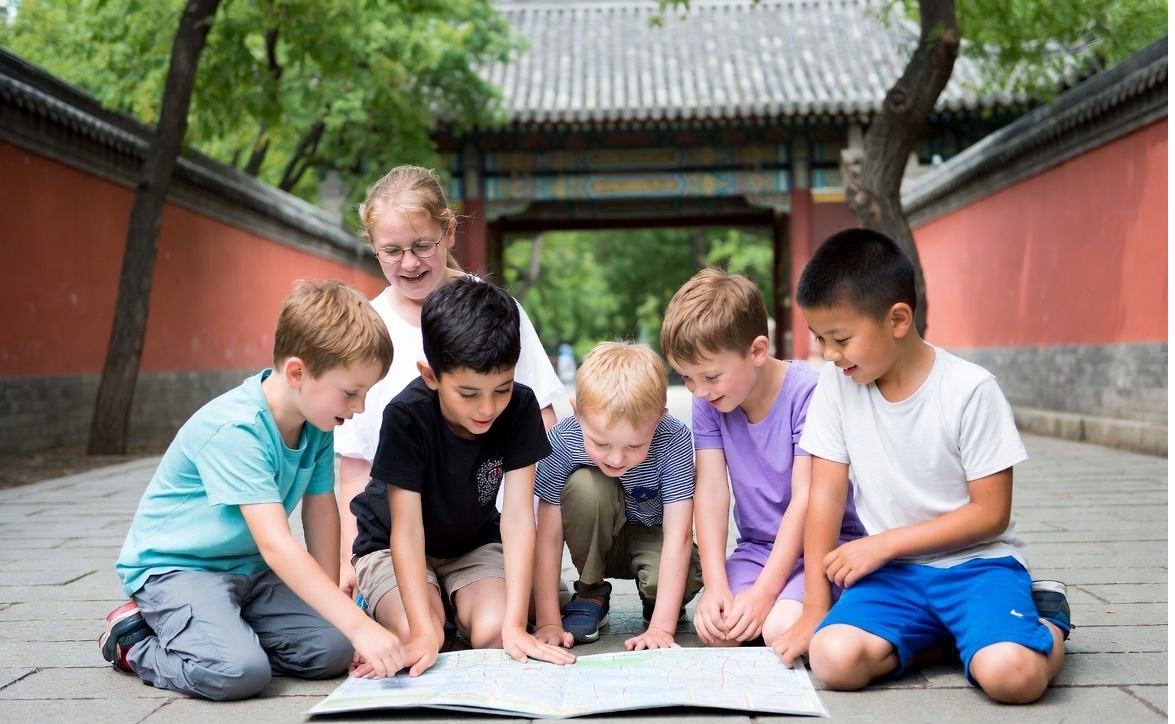
To raise Australian children who are genuinely at home in China, not visitors to it. Childrenwho can walk into a Chinese classroom, follow the lesson, join the game at lunch and ordertheir own dumplings afterwards. We do that one camp at a time, with a parent alongsidethem the whole way.
Our Values

Connection Comes First
Strengthening the bond between parents and kids through shared discovery.
Learn More ⟶

Curiosity is Our Compass
Learning through experiences.
Learn More ⟶

Less Rush, More Wonder
We slow down and soak it all in.
Learn More ⟶

Safe, Seamless, Stress-Free
We handle the details; you make the memories.
Learn More ⟶

A New Kind of Family Travel
Small groups. Big adventures. Learning and growing together.
Learn More ⟶
Connection comes first
Most family travel puts parents and children in the same place doing different things. We built this the other way round.
Your child spends the school day inside a Chinese classroom. You spend it however you like, in a city worth exploring. Then you come back together and compare notes, and they tell you what happened in a language they could not speak a fortnight ago.
Weekends are the whole group together: the Great Wall, the Forbidden City, the hutongs, a dumpling table with flour everywhere. Not a coach and a guide with a flag. A small group of families moving at a pace that suits children.
Why every child travels with a parent
This is not a drop-off camp and we will not run it as one. Every child has at least one parent with them for the whole fortnight.
Partly that is about a seven year old in a foreign country, and partly it is about what the fortnight is for. A child who does something difficult and interesting, and has a parent there to see it, comes home with something different from a child who did it alone. The shared memory is the point.
Curiosity is our compass
Children learn a language when they need it, not when they are told to.
A weekly Mandarin lesson at home teaches a child about Chinese. Two weeks in a Chinese classroom teaches them to use it, because there is no option to switch back to English. They need to know what the teacher just said. They want to join the game. They would like to know what is for lunch.
What that looks like day to day
Morning meeting in Mandarin. Maths in Mandarin. Art, music, sport, all in Mandarin. Pinyin and characters taught properly, at your child’s level, by teachers who work with beginners every year.
Then the parts that are not lessons at all: the queue for lunch, the playground, the walk to the next classroom. That is where most of it actually goes in.
Honest expectations
Two weeks will not make your child fluent. Anyone who tells you otherwise is selling something.
What two weeks does is break the fear. Children come home willing to open their mouths, which is usually the thing that has been missing. The families who get the most from this treat it as the start of something rather than a fix.
Less rush, more wonder
A fortnight in one city, not a country in ten days.
Most China trips with children are a forced march: four cities, a bullet train every second day, everyone exhausted by the Terracotta Warriors. Nobody remembers much and nobody learns anything.
We stay put. Two weeks, one city, one school. Your child builds a routine, makes the same walk each morning, recognises the same faces. Routine is what turns a place from a destination into somewhere you have lived.
What we leave out on purpose
No theme parks. No packed schedule of attractions. No second city squeezed into the last weekend.
Weekdays your child is at school and your time is genuinely your own, whether that means a museum or a long lunch or doing nothing. Weekends are two or three things done properly rather than eight done at a jog. Evenings are optional. Nobody is counting who turned up.
Safe, seamless, stress-free
Doing this independently means arranging a school placement in a language you may not read, finding somewhere to stay near it, getting a child across Beijing by 8am in January, and solving whatever goes wrong with no local support. That is the work we take off you.
Who is with your child, and when
When | Who |
Morning bus | A Mandarin Mates team member on every run, children checked at pickup and on arrival |
School day | Their class teachers, with our team contactable throughout |
Afternoon bus | A Mandarin Mates team member, back to your accommodation |
Everything else | You. Every child has a parent for the whole fortnight |
The team on the ground
All three founders are in Beijing for the fortnight, with our China-based team alongside. Our own children are in the same classrooms. Everything runs through a WeChat group chat set up before you travel, and someone is reachable at any hour for the whole fortnight.
You will know what is going on
Daily updates with photos: your child going into school, what they did during the day. You are not sitting in a hotel at 2pm wondering.
Travel insurance
Required for every traveller. Families arrange their own and confirm cover before departure. Declare the school attendance to your insurer in writing before you buy, and check the after-school activities your child chooses are covered.
A new kind of family travel
There is a gap between a language school and a holiday, and nobody was filling it.
Send your child to a language camp and they learn in a room full of other foreign children. Take them on a tour and they see China through a coach window. Neither gets them inside a real Chinese classroom, and neither includes you.
What is different here
- A real class at a real school, alongside local students, not a visitors’ group
- A parent with every child, so the experience is shared rather than reported back
- Ten school days, long enough to build a routine
- Five to ten families, small enough that we know everyone’s name
- One partner school per camp, so we know its teachers and how it welcomes a child who does not yet speak the language
Why so small
January 2027 is our first camp. Ten families is a number we can genuinely look after, and it is the only honest way to run a first one. It is also better for the children: a handful of newcomers across different classes join in properly, where thirty would turn into a visiting group that sticks together and speaks English.
Where this goes
Beijing is where we start. We are building toward camps in other Chinese cities, and each will open the same way: one school, one small group, properly known before we invite families in.
We built this as the camp we wanted for our own children, and they are coming on it.